

Prepare for Martyn's Law (Terrorism of Premises) Act 2025
Martyn’s Law: What Your Organisation Needs to Know
Communication is the fourth public protection procedure — and the one the other three depend on. The statutory guidance is now published, so what preparedness looks like is no longer in question.
- Important note: Audiebant does not – and no provider should – claim to offer a Martyn’s Law solution that makes you legally compliant. We provide systems and support that help you align your communications and preparedness with the requirements, but legal compliance remains your organisation’s responsibility.
On this page:
01 — What is Martyn's Law?
Martyn’s Law is now law, and the preparation window is open.
Martyn’s Law, officially the Terrorism (Protection of Premises) Act 2025, introduces a new legal duty for organisations to assess terrorism risks, strengthen preparedness and implement effective measures to protect people during terror attacks.
Whether your premises welcome hundreds or thousands of people, Martyn’s Law makes it clear: preparation saves lives.
02 — What the guidance actually says
Three procedures. One way to start them.
Evacuation, invacuation and lockdown are different responses to different threats — and they can look identical to a visitor until someone says which one is happening.
Quotations are from the Terrorism (Protection of Premises) Act 2025: Statutory Guidance (Home Office, 15 April 2026), reproduced under the Open Government Licence. Highlighting is ours. Read the full guidance on GOV.UK.
Terrorism (Protection of Premises) Act 2025 Statutory Guidance: Section 7
- Evacuation “The process of getting people away from danger by moving them out of the premises or event (or part of the premises or event).
- Invacuation “The process of moving people away from danger to a place within the premises or event where there is less risk of physical harm being caused to them.”
- Lockdown “The process of securing the premises or event to prevent individuals entering or leaving (for example, to restrict or prevent the movement of an attacker by locking doors, closing shutters or using available barriers).”
- Communication “The process of ensuring information is provided to individuals at the premises or event (for example, alerting people to danger as quickly as possible and providing instructions to remain in place or move away, where it is safe to do so).”
“The purpose of an evacuation procedure is to get people away from danger by moving them out of the premises or event, or a part of the premises or event. In developing an evacuation procedure, the responsible person should consider how plans will vary according to the specific circumstances of their qualifying premises or qualifying event.
The below considerations are not exhaustive, but those responsible should also consider:
- whether the attack is taking place inside or outside the premises
- how people will be directed to follow the evacuation procedure in response to an attack how staff at the
premises or event will direct people to move away from danger”
- How evacuation plans for terrorist attacks complement, and do not conflict with, the evacuation plans for fire emergencies. This includes how an evacuation procedure for a terrorist attack would be communicated to people. For example, where possible, evacuation plans for terrorist attacks should avoid using the normal fire alarm on the basis that people may respond inappropriately to the threat.
- Whether it is safer for people to move away from the premises, the event and the immediate vicinity instead of gathering in a specific place nearby. Dispersal from the premises is likely to be the most appropriate action”
“The purpose of a communication procedure is to ensure information is provided to people at the premises or event, alerting them to danger as quickly as possible if an attack is taking place.”
“Effective communication with those on the premises or at the event is essential to enable the other procedures to be started quickly, reducing the risk of harm to people.
Communication can take many forms, including verbal communication, signage, posters, briefings and audio broadcasts.
Communication could include a range of messaging such as to move inside and stay away from windows, to move to a designated safer space or safe exit route, to move to the back of the building to wait for further instructions, or simply to get down, stay quiet and stay hidden. This information should be shared quickly.”
“In addition to the considerations at paras. 7.20 to 7.32, when developing a communication procedure, the responsible person should consider:
• Information should be simple and clear to ensure any instructions are easy to understand and should be specific to the actions required to follow the relevant procedure.
• How to quickly share information in the way that works best for the premises or event.”
“When developing a communication procedure, the responsible person for larger and more complex premises or qualifying events should also consider:
- Where people may be located when information is communicated and whether information will reach them effectively in those areas.
- How each procedure will be communicated effectively. For example, the instructions communicated for an evacuation procedure should be different to the instructions communicated for a lockdown procedure.”
03 — Where the law stands
The guidance landed. The clock is now real.
Through 2025 the honest answer was “we’re waiting on guidance”. That answer has expired. Government, the regulator and sector bodies all now expect organisations to be moving toward readiness during the implementation window rather than at the end of it.
3 Apr 2025
Royal Assent
The Act passes, following campaigning by Figen Murray OBE in memory of her son Martyn Hett.
The Home Office sets out, in detail, what the four procedures and four measures mean in practice. Communication is defined as ensuring information reaches individuals at the premises.
Apr-Jun 2026
The regulator’s draft section 12 guidance — how it will inspect, support and penalise — went out to consultation, closing 12 June. Core provisions commenced 15 June.
The SIA publishes final section 12 guidance and its consultation report. Regional inspection teams and the notification portal are being stood up now.
Spring 2027
Duties expected to apply, with the exact date to be confirmed. Systems ordered in 2027 will be competing for the same installation slots.
04 — Communication requirements
What the guidance expects, and what we put in place.
Counter Terrorism Policing and the National Protective Security Authority set out four expectations for emergency announcements. Read across.
The expectation
Clear, consistent and unambiguous announcements
How Audiebant supports it
Crystal-clear, AI-enhanced announcements triggered by any authorised user. An audio-first approach with AI voice and text-to-speech gives correct pronunciation and intelligibility, the same way every time — no reading a script over a panicking crowd.
The expectation
Accessible to everyone present, including disabled people
How Audiebant supports it
Audiescreen and Audiesafe show the message visually on smart boards, laptops, desktops and digital signage, and mobile phones alongside the audio — reaching people who are deaf or hard of hearing, wearing headphones, or standing in a high-noise area.
The expectation
Real-time information to the public and first responders
How Audiebant supports it
Live or scheduled messages per scenario from the central portal, emergency buttons, quick-click wearables and the mobile app.
The expectation
Staff trained and confident using the system
How Audiebant supports it
Our team supports setup, onboarding and ongoing use. Using the same system for daily announcements — bells, shift changes, site notices — keeps authorised users fluent in the tool they will need under pressure, and returns value every day.
05 — Getting ahead
A communications plan you can evidence, not just describe.
No pressure, no jargon. Here’s exactly what happens when you work with us.
System demo
Our experts learn what your site needs and show you the system in action.
Proposal sent
Be ready before spring 2027, not during it.
Talk to our experts today. We’ll share ideas for strengthening your communication plans and show you our award-winning system in action.
Fill out the form below, and our team will be in touch to book your free 20-minute online demonstration.
TRUSTED BY


























































WHAT WE DO
Total communication. Total control.
In any scenario, we ensure your announcements aren’t just sent, they’re seen and heard by everyone.
OUR PRODUCTS
One system. Full coverage.
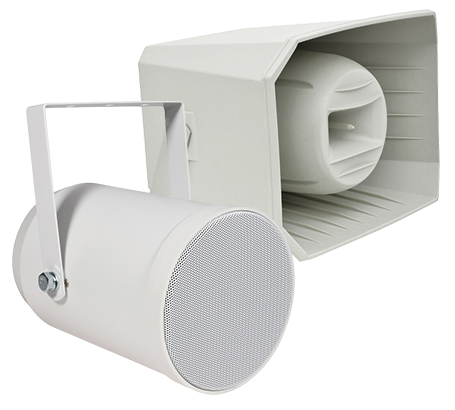
Audio announcements
Scalable internal and external speaker system
- Integrates with exisiting PA systems
- Live text to speech
- Custom content creation
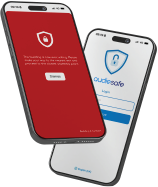
Mobile alerts
Critical mobile alerts delivered straight to smartphones
- DND Override
- Push notifications
- On or off site
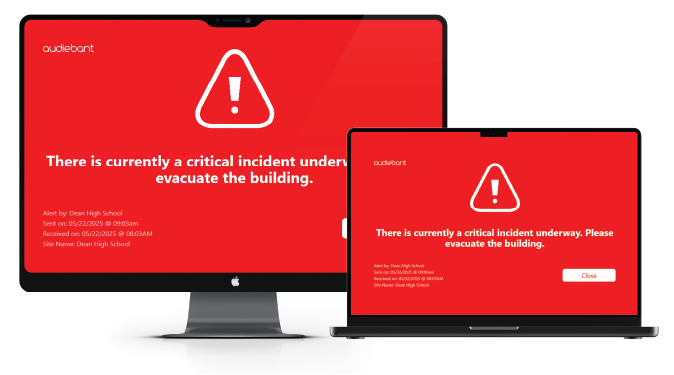
Screen messages
Instant, high-visibility visual alerts on all screens
- Instant alerts
- Custom display
- Lock screen override
Plus additional support from:
- Email alerts
- SMS alerts
- Live voice calls
Don't just take our word for it.
Audiebant is an award winning system in multiple categories.

Best Mass Communication Solutions Provider
Business Circle Awards 2026

Best Infrastructure Partner
Prolific North Tech Awards 2024

Regional Breakthrough Winner
Spectator Innovator of the Year Awards 2024